Article & News

Category: Providers

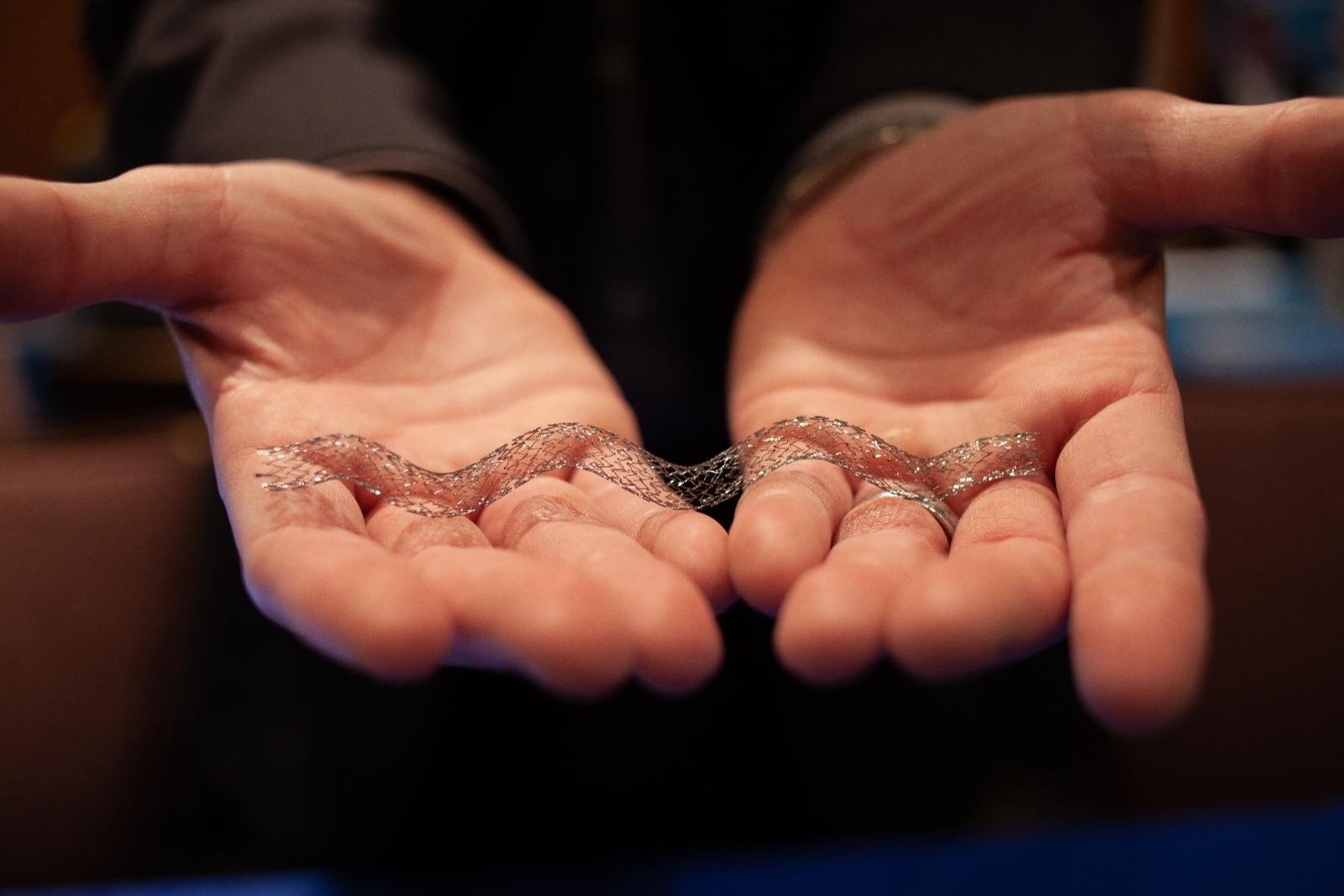
Two doctors hands hold out a stent used for vascular surgery.
May-Thurner Syndrome

May-Thurner Syndrome & Venous Stenting

What is May-Thurner Syndrome? May-Thurner Syndrome is an anatomical abnormality in which the Left Iliac Vein is compressed by the Right Iliac Artery. Why does May-Thurner Syndrome Matter? Veins carry blood at much lower pressures than arteries. With the Right Iliac Artery


Peripheral Arterial Disease

Peripheral Arterial Disease and Foot Wounds

Authored by Lauren Molchan, DPM R2 Peripheral Arterial Disease and Foot Wounds When do you suspect PAD in patients with wounds? · On physical exam, findings that would indicate PAD include wounds located on the tips of the toes or foot, wounds

A woman's hands cradle her foot and ankle area while sitting on a wood floor.
Peripheral Arterial Disease

Peripheral Arterial Disease

Authored by Maria Tran OMS III KCU Definition Narrowing and occlusion of the peripheral arteries due to atherosclerosis Screening and Diagnosis Clinical diagnosis can be initially made from an array of symptoms including: – resting pain, cramps, paresthesias distal to arterial occlusion–

Abdominal Aortic Aneurysm

A Physician’s Reference for Abdominal Aortic Aneurysm (AAA)

By Bryan Kramer, MD and Taylor Caddell, RVU MSIII Quick Review Abdominal aortic aneurysms are dilations of the abdominal aorta, usually occurring below the renal arteries and above the aortic bifurcation.  Risk factors for AAA include male gender, advanced age, smoker or

A physician touches a patients leg while examining them for venous disease.
Chronic Venous Disease

Lower Extremity Chronic Venous Disease

Authored By: Dr. Bryan Kramer, MD and Grace Boyle, OMS-II What is Lower Extremity Chronic Venous Disease? Definition: Spectrum of lower extremity vein abnormalities that may be morphologic and/or functional in nature that lead to venous dilation  May or may not be

Leriche Syndrome

Leriche Syndrome

What is Leriche Syndrome? Leriche Syndrome is a condition that manifests symptoms because of a blockage in arterial blood flow. This arterial occlusion is noted at the area of bifurcation, or division, of your aorta and common iliac arteries. Usually, this blockage