
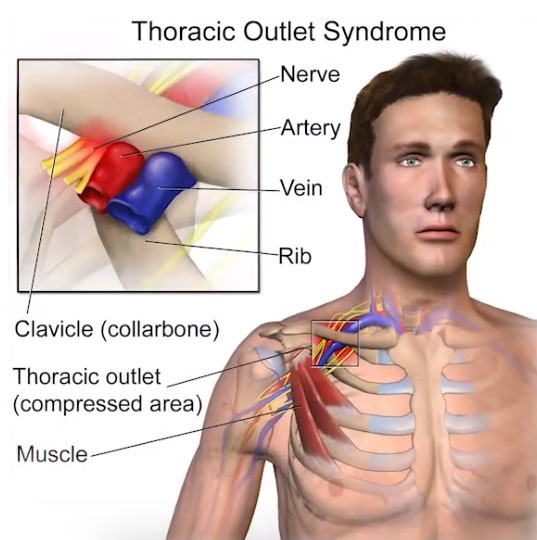
Thoracic Outlet Syndrome (TOS) occurs when nerves, arteries or veins are impinged in the space over your first rib or thoracic outlet.
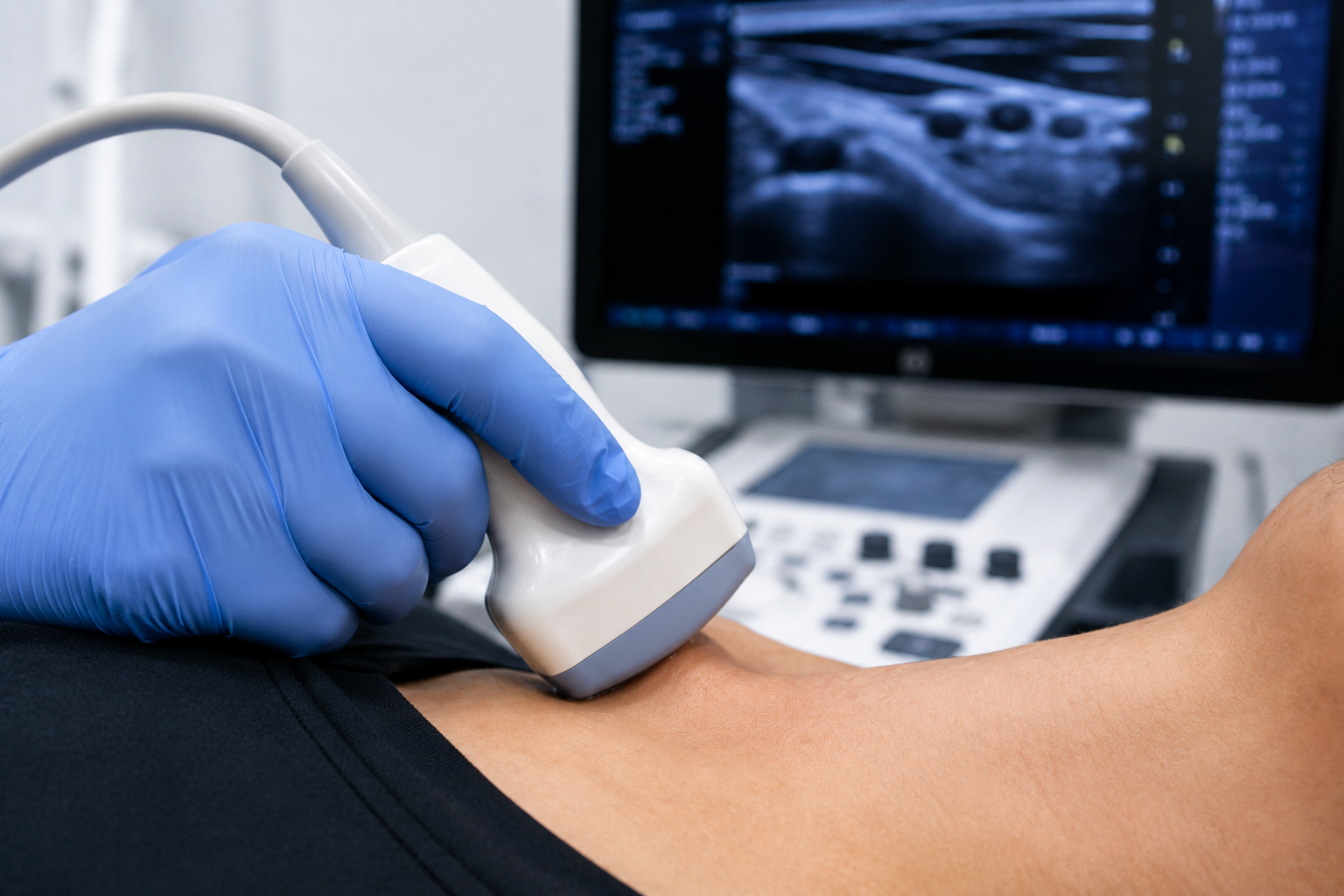
Besides a detailed history and physician examination, your provider may request additional tests including x-rays or duplex ultrasound of the neck, chest and shoulder, scans of the neck brachial plexus or shoulder, electro diagnostic studies of the arm and diagnostic blocks of the plexus or the scalene muscle.
For each type of problem- venous, arterial or nerve impingement- there are both non-surgical and surgical options.
Arterial TOS: When the subclavian artery has been injured by the bony and non-bony structures at the thoracic outlet, the best treatment is surgery.
Venous TOS: When a clot forms in the vein, swelling can be treated with compression sleeves and blood thinners to prevent more clots from forming. If the clot is found early enough, some patients may be candidates for lysis, or removal of the clot with clot busting drugs.
Neurogenic TOS: Pain from impingement of the brachial plexus may be treated through a variety of options including physical and occupational therapy, massage by trained therapists, nerve stimulator to block the pain messages from the arm, and medicines to aid in sleep, reducing swelling and pain and treating depression. Other methods include biofeedback, acupuncture, meditation, chiropractic care, yoga, Pilates and other therapies. If these therapies fail after 12 weeks and the symptoms are intolerable, surgical decompression of the brachial plexus may become a reasonable option.