
PVD develops most commonly as a result of atherosclerosis, or hardening of the arteries, which occurs when cholesterol and scar tissue build up, forming a substance called plaque inside the arteries. This is a very serious condition. The clogged arteries cause decreased blood flow to the legs, which can result in pain when walking, and eventually gangrene and amputation. Because atherosclerosis is a systemic disease, individuals with PVD are likely to have blocked arteries in other areas of the body. Thus, those with PVD are at increased risk for heart disease, aortic aneurysms and stroke. PVD is also a marker for diabetes, hypertension and other conditions.
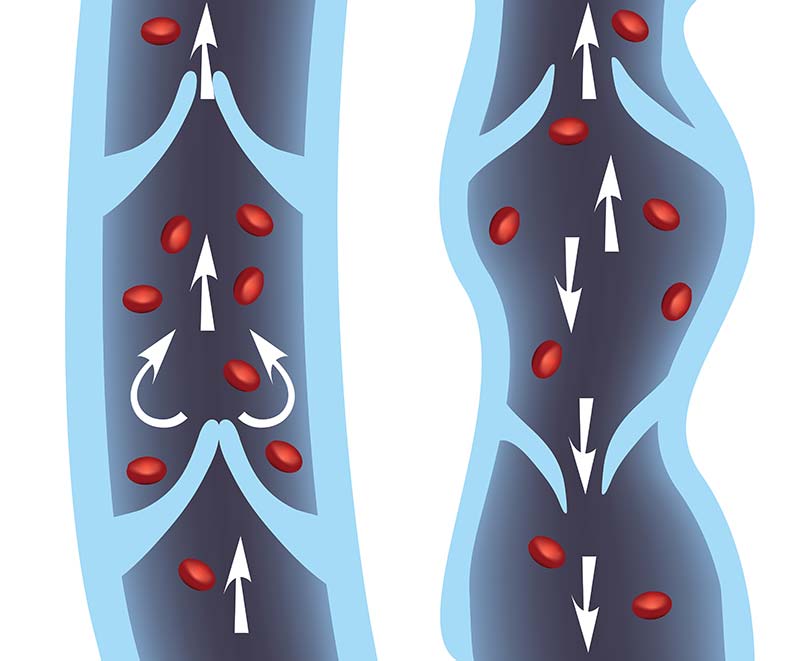

Peripheral Venous Disease is typically diagnosed through a combination of a physical examination, a review of symptoms, and advanced vascular imaging. Your provider may use ultrasound technology to evaluate blood flow and identify issues such as damaged veins, blood clots, or poor circulation. Early detection can help prevent complications and lead to more effective treatment options.
This procedure is considered to be minimally invasive in comparison to open surgery. It is most effective for more localized blockages in the larger arteries. Percutaneous (through the skin) balloon angioplasty, or just “angioplasty,” is a technique for enlarging an artery that is blocked or narrowed without surgery. Angioplasty is not a permanent solution for most people. Stenting is a technique for arteries that are very severely blocked or begin to close up again after angioplasty.
The majority of peripheral vascular lesions can be managed by placement of a stent, a small metal mesh sleeve that is fixed inside the narrowed artery. The stent holds the artery open. Eventually, new tissue grows over the stent. A bare metal stent was the initial approach. However, development of restenosis or fibrous scar tissue growth inside the stent leads to recurrent obstruction.
An endarterectomy is a surgical procedure that removes the plaque from your artery to restore blood flow to your leg artery, especially in the areas where stents cannot be placed. The artery is then stitched closed usually with a patch. The recovery is also relatively quick, within a week or two.
Bypass surgery creates a detour around a narrowed, or blocked, section of a leg artery. This is similar to the artery bypass operation done on the heart. A piece of vein, harvested from another part of your body, or a piece of synthetic artery is used to bypass or detour the obstructed segment of disease, therefore restoring blood flow to the downstream or distal portion of the artery.
In extreme cases, especially if your leg has gangrene and is not salvageable, your surgeon may recommend amputating your lower leg or foot. Amputation is a treatment of last resort. Vascular surgeons usually only perform this procedure when the circulation in your leg is severely reduced and cannot be improved by the methods discussed already. More than 90% of patients with gangrene who are seen by vascular specialists can avoid amputation or have it limited to a small portion of the foot or toes.