
Peripheral Arterial Disease (PAD) is a serious chronic disease characterized by build up of plaque which narrows arteries, usually in the legs. Plaque is typically caused by artherosclerosis or hardening of the arteries, which occurs when cholesterol and scar tissue gradually builds up, reducing blood flow or even blocking the artery all altogether. As a systemic disease, individuals with artherosclerosis are likely to have blocked arteries in other areas of the body putting them at higher risk for heart disease and stroke.
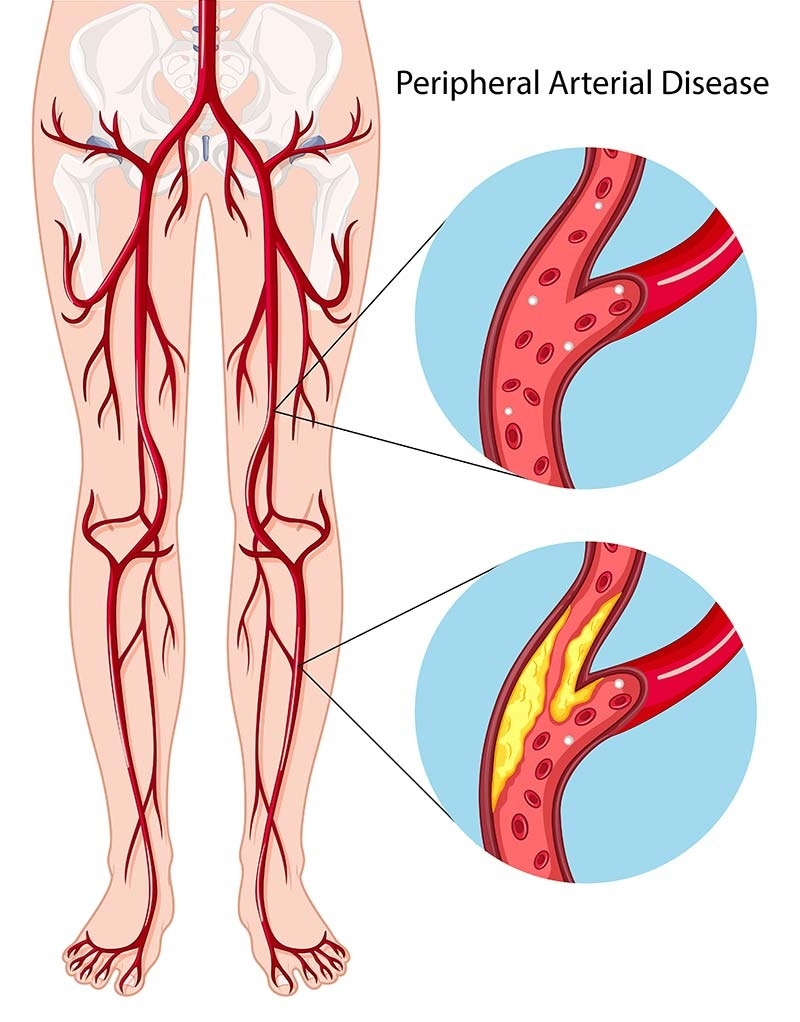

Because PAD symptoms are similar to other diseases, your doctor may perform an ankle blood pressure measurement (Ankle-Brachial Index, ABI) or CT Angiogram to confirm the diagnosis.
This minimally invasive procedure is the most effective treatment option for localized blockages in larger arteries. A catheter, or balloon, is inserted into the arteries to stretch or enlarge the blocked or narrowed artery without surgery to enable blood to flow more easily to the extremity. A stent or small metal sleeve may be placed in the artery to keep the artery open once the balloon is removed. This is often performed as an outpatient procedure and the recovery is minimal.
An endarterectomy is a surgical procedure that removes the plaque from your artery to restore blood flow to your leg artery, especially in the areas where stents cannot be placed. The artery is then stitched closed usually with a patch. The recovery is also relatively quick, within a week or two.
Not all blockages can be treated with angioplasty, and some require open surgery. Bypass surgery uses a vein or synthetic tube to create a detour around a narrowed, or blocked, section in the artery to restore blood flow to the downstream or distal portion of the artery. This requires a longer hospital stay and recovery but may be the most durable long term solution.