
What is Leriche Syndrome?
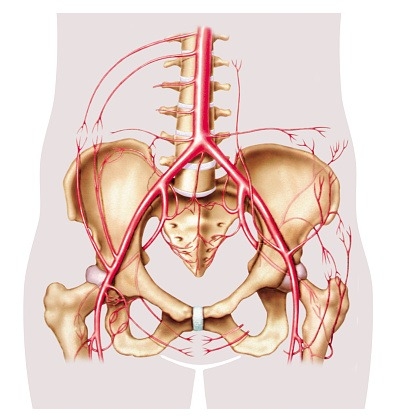
Leriche Syndrome is a condition that manifests symptoms because of a blockage in arterial blood flow. This arterial occlusion is noted at the area of bifurcation, or division, of your aorta and common iliac arteries. Usually, this blockage is due to a plaque buildup, also known as atherosclerosis.
Leriche Syndrome can be categorized into three different classifications: Type 1 (atherosclerosis of distal abdominal aorta and common iliac arteries), Type 2 (atherosclerosis of distal abdominal aorta, common iliac arteries, and external iliac arteries), Type 3 (atherosclerosis of aortoiliac segment and femoropopliteal vessels). To diagnose this condition, your physician may perform screening tests, such as an ankle-brachial index test (ABI). An ABI less than 0.9 indicates that your legs and feet are not receiving as much blood flow as required. Also, duplex ultrasonography or CTA may be used to pinpoint the specific location of occlusion.
What are the Symptoms?
Patients with arterial blockage may have no symptoms. However, the most common symptoms for patients with Leriche Syndrome include hip, thigh, and buttock claudication which may be on both sides. Claudication is described as a cramping pain that is exacerbated by exercise. Another crucial aspect of Leriche syndrome is impotence, which is the inability to achieve an erection or orgasm. In fact, sexual dysfunction is so often associated with Leriche Syndrome that the absence of this symptom suggests that another diagnosis should be considered. In addition, muscle atrophy, or breakdown, in your legs may result from this chronic arterial blockage. Your physician may also tell you, after examination, that your femoral pulses are diminished or absent due to the disrupted flow of blood.
Who is at Risk?
Men with atherosclerosis are especially at high risk for Leriche Syndrome. Women are less likely to develop this condition in comparison to men. Patients who have a predisposition to atherosclerosis are generally considered to be at higher risk for this condition, and there are several modifiable risk factors for plaque buildup. Atherosclerosis is potentiated by hypertension, smoking, lower physical activity, obesity, a diet high in saturated fats, and high glucose or lipid levels.
What are the treatment options?
If no treatment is pursued, a poor prognosis with worsening symptoms is more likely. Treatment is patient-specific and based on age, health, and severity. There are several options for treatment, and these management choices may help slow the progression of symptoms. First, it is recommended that all patients who have risk factors for atherosclerosis treat or alter relating lifestyle choices. Exercise programs have been shown to decrease walking restrictions. Surgical treatments for Leriche Syndrome include aortobifemoral bypass, percutaneous transluminal angioplasty, and thromboendarterectomy. Aortobifemoral bypass, which redirects blood around the blocked blood vessels, has been shown to have the best blood flow rates with patency in patients who are able to tolerate the procedure. Imaging studies may also be ordered and help your physician determine the likelihood of successful surgery and possible complications. Finally, a medication called Cilostazol is occasionally prescribed to help with symptoms of cramping.
Read More from CardioVascular Institute of The Rockies
Who Is Most at Risk for Fibromuscular Dysplasia?
Keeping your blood vessels healthy is one of the most important steps you can take to live a long, healthy life. Along with eating a
What are the Complications of Endovascular Aneurysm Repair?
When your blood vessels aren’t healthy, your overall well-being is put into jeopardy. In fact, many vein and artery conditions can lead to life-threatening complications,
Can a DVT Go Away on Its Own? What You Need to Know
Being diagnosed with a blood clot can be a scary experience. While some blood clots are a normal part of your bodily function and will
What Does Claudication Feel Like? Causes and Symptoms
What does claudication feel like and what are the most common causes? When your arteries are not healthy, your overall quality of life can be
Geniculate Artery Embolization (GAE) for Knee Pain Relief
By Monika Neale, MS III GAE – POSSIBLE NEW SOLUTION FOR SOME KNEE PROBLEMS The network of the geniculate arteries comprises six arteries that supply
Arterial vs. Venous Ulcers of the Lower Extremity
By Monika Neale, MS III The two most common types of lower extremity wounds are venous and arterial ulcers. Although they may look and sound