
Who Is Most at Risk for Fibromuscular Dysplasia?
Keeping your blood vessels healthy is one of the most important steps you can take to live a long, healthy life. Along with eating a
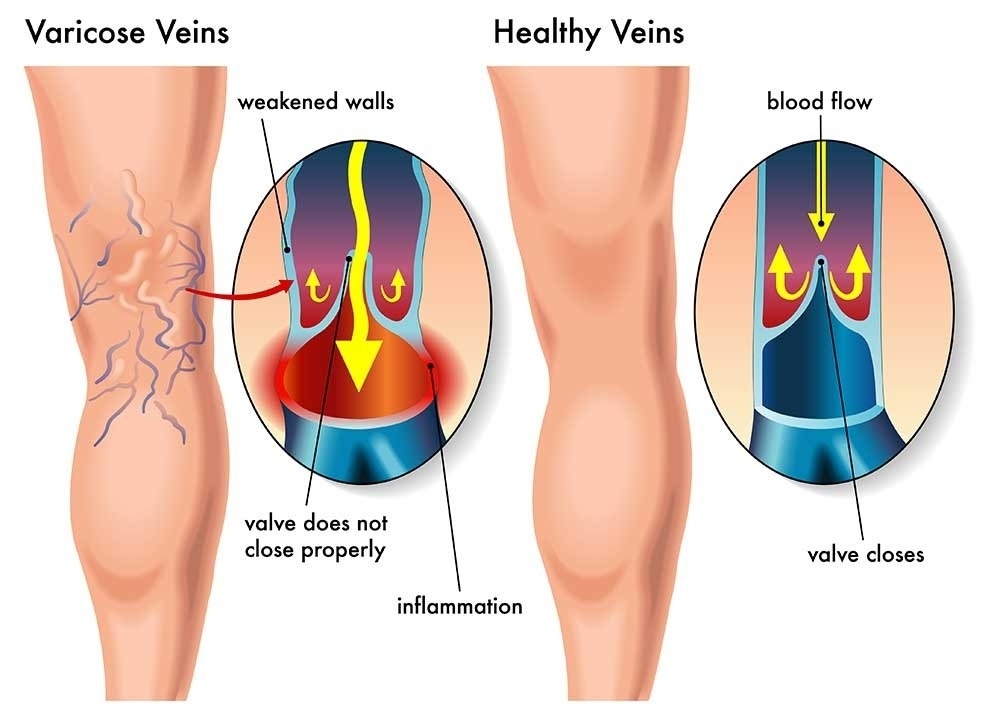
Varicose veins are quite common and often lead to pain, embarrassment and possibly further health issues. According to the American Society for Vascular Surgery, 20-25 million Americans have varicose veins.
Varicose veins often present as blue, rope-like vessels under the skin usually in the legs and feet. Varicose veins are often painful and unsightly. Usually caused by reflux or valves not working properly, the reversal of blood flow and venous stasis (slow blood flow or pooling) may result in leg swelling (Edema), skin changes and in more severe cases, venous ulcers, if left untreated.
Given the prevalence of varicose veins, many myths continue to surround them. The physicians at the Vascular Institute of the Rockies, the largest vascular group in the Rocky Mountain region, will debunk some of these top myths.
While varicose veins are certainly visible on your legs, they can significantly impact your health and well-being. People may experience heaviness/fatigue in their legs, leg swelling, Restless Leg Syndrome, leg cramping while sleeping, color changes in skin, pain, itching, burning, and an increased risk of blood clots.
While it is more common for women to have varicose veins, men certainly have them as well. According to the American Society for Vascular Surgery, 17% of men and 33% of women have varicose veins.
Although varicose veins become more common as you age, people may get varicose veins at any age.
A variety of risk factors may lead to an increased risk of varicose veins including heredity, excess weight or obesity, prolonged periods of standing or sitting, pregnancy and older age. Women are also more likely than men to get varicose veins.
For proper diagnosis, a vascular specialist will complete a comprehensive evaluation that includes an ultrasound to detect varicose veins, evaluate blood flow and determine the efficiency of vein valves.
Small, habits or lifestyle changes may help to reduce the pain caused by varicose veins:
Minimally invasive procedures or surgery may also be an option if these measures do not help. Talk to your doctor to determine the best option for you.
While surgery used to be the only option, there are now a range of options including quick, minimally invasive, outpatient procedures.
Working on hard surfaces, such as cement, does not lead to varicose veins but may contribute to musculoskeletal problems.
While is it true that venous pressure does increase with little to not activity, such as standing or sitting for long periods of time, it does not necessarily lead to varicose veins. Taking short walks, stretching or doing calf pump exercises may help to alleviate some pain and symptoms.
This popular myth has been passed down through generations but fortunately has no merit. Varicose veins occur as a result of damaged or weakened veins. Crossing your legs does not lead to damaged or weakened veins.
Spider veins, or Telangietasias, are small, dilated capillary veins that are bluish-red in color and often appear in weblike patterns typically on legs or around the nose and lips. Spider veins are typically more cosmetic than symptomatic.
Varicose veins are common and often present as rope-like blue vessels typically in the legs or feet. Varicose veins are oftentimes painful presenting with symptoms such as heaviness/fatigue in legs, leg swelling, restless leg syndrome, leg cramping while sleeping, pain, itching and burning. If left untreated, varicose veins may results in leg swelling, skin changes or venous ulcers in more severe cases.
Varicose veins are oftentimes covered by insurance whereas spider veins typically are not since they tend to be cosmetic only. Patients may feel a very mild discomfort during the treatment and downtime is usually minimal afterwards depending on the size and severity of your veins.
This may have been true years ago but with today’s technology and treatment options, this is no longer the case. Vein ablation, Sclerotherapy and Phlebectomy are all effective treatment options and typically few patients require follow up treatments on the same veins.
To the contrary, exercise is great for varicose veins as it gets your heart pumping and your blood moving. Please note, limited exercise and compression socks may be recommended right after a varicose veins treatment to ensure blood does not pool in the legs.
Although pregnancy does not cause varicose veins it can exacerbate them. Typically harmless, varicose veins may occur when the uterus applies pressure to the large vein (inferior vena cava) which transports blood back to the heart from your lower extremities (feet or legs). Oftentimes, varicose veins will fade after delivery.
Varicose veins run in the family for only 50% of all people who have them. So, if your parents and grandparents had them, your likelihood is higher but it does not guarantee that you will have them. Other risk factors such as age, excess weight, prolonged sitting/standing, pregnancy and gender may increase your likelihood as well.
While massaging your achy legs or feet may provide temporary relief of swelling or discomfort, it does not make varicose veins go away. Advanced treatment options such as vein ablation, sclerotherapy and phlebectomy are all proven, effective treatment options.
Most insurance companies require patients to wear compression stockings before treatment. Compression stockings are oftentimes required post treatment, sometimes up to six weeks.
There is no medical reason to wait until after women are done bearing children to treat varicose veins. In fact, women may benefit from having varicose veins treated before even becoming pregnant. However, if your varicose veins are treated before pregnancy, they are more likely to recur.
There is actually no correlation between tattoos and varicose veins.
If you have questions or concerns about varicose veins or your lifestyle is being negatively impacted by the pain and discomfort of varicose veins, talk to your doctor today. A primary care physician can recommend you to a vascular specialist that can quickly and easily treat your varicose veins today.
If you’d like more information about varicose veins, please refer to your FAQ or watch our video. Feel free to reach out to us if you’d like to speak directly to a vascular specialist.
Keeping your blood vessels healthy is one of the most important steps you can take to live a long, healthy life. Along with eating a
When your blood vessels aren’t healthy, your overall well-being is put into jeopardy. In fact, many vein and artery conditions can lead to life-threatening complications,
Being diagnosed with a blood clot can be a scary experience. While some blood clots are a normal part of your bodily function and will
What does claudication feel like and what are the most common causes? When your arteries are not healthy, your overall quality of life can be
By Monika Neale, MS III GAE – POSSIBLE NEW SOLUTION FOR SOME KNEE PROBLEMS The network of the geniculate arteries comprises six arteries that supply
By Monika Neale, MS III The two most common types of lower extremity wounds are venous and arterial ulcers. Although they may look and sound