
Authored by Spencer Cooper, OMS III
Subclavian Steal Syndrome Explained
Definition
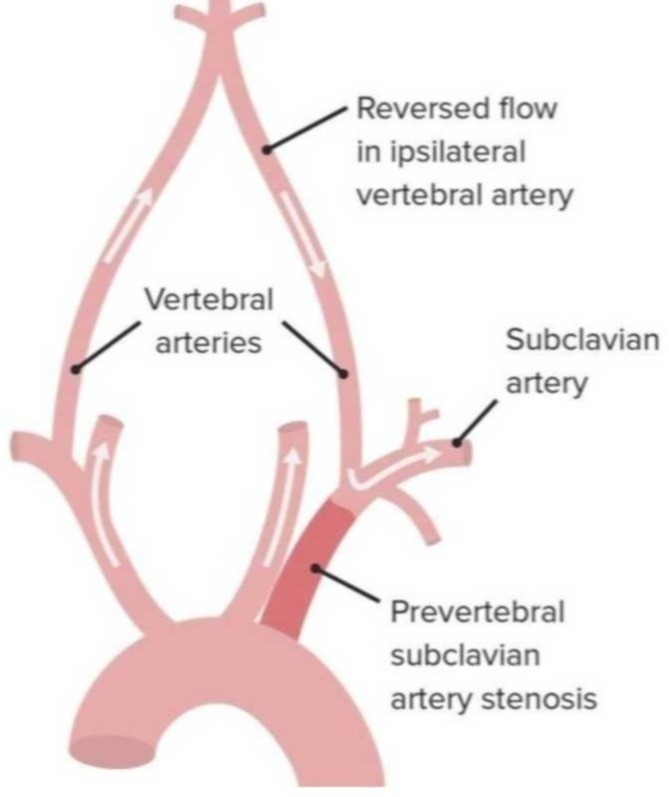
Subclavian steal syndrome is defined by neurologic symptoms such as dizziness, vertigo, or syncope and arterial disease symptoms such as arm claudication. caused by retrograde flow in one of the vertebral arteries. The retrograde flow usually develops as a result of stenosis or occlusion of the proximal subclavian or brachiocephalic artery. The neurologic symptoms may worsen with exercise of the upper extremity.
Risk Factors
Risk factors for subclavian steal syndrome include:
• Age
• Sedentary lifestyle
• Smoking
• Hypertension
• Dyslipidemia
• Diabetes
• Cardiovascular disease
Symptoms and Clinical Signs
Patients with subclavian steal syndrome will present with symptoms of dizziness, syncope, or loss of coordination typically in association with exercise of their arms.
Signs of subclavian steal syndrome include the presence of diminished brachial or radial pulses in the affected arm with interarm differences in blood pressures. A difference greater than 40 mmHg is associated with development of the syndrome. Others include typical peripheral arterial disease signs such as arm or hand pallor and finger ulcers or necrosis.
Pathogenesis
Subclavian steal syndrome results from hemodynamic changes due to stenosis or occlusion of the subclavian artery. More than 80% of symptomatic cases involve the left subclavian artery. The main cause is atherosclerosis with plaques formed proximal to the origin of the vertebral arteries.
Less common causes are inflammation, fibromuscular dysplasia, or congenital disorders.
Subclavian steal syndrome may be classified into 3 grades based on severity.
Type I – Antegrade vertebral flow is reduced
Type II – Antegrade flow during diastolic phase and retrograde flow during systolic phase
Type III – Permanent retrograde vertebral flow
Diagnosis
Diagnosis can be made using imaging such as duplex ultrasound of the subclavian and vertebral arteries. CT angiography can be used to determine the underlying cause and develop a treatment plan.
Treatment Options
Conservative management includes lifestyle changes such as smoking cessation, weight loss, and regular physical exercise.
Medications to use include controlling dyslipidemia, hypertension, and diabetes along with antiplatelet therapy.
Patients with burdensome symptoms and occlusive disease can be managed by a vascular surgeon, either with open surgery or percutaneously.
Percutaneous balloon angioplasty and stenting can be achieved in 90% of cases when stenting will not compromise the vertebral circulation.
Surgical revascularization typically consists of a carotid-subclavian bypass with a success rate of greater than 80%.
Read More from CardioVascular Institute of The Rockies
Who Is Most at Risk for Fibromuscular Dysplasia?
Keeping your blood vessels healthy is one of the most important steps you can take to live a long, healthy life. Along with eating a
What are the Complications of Endovascular Aneurysm Repair?
When your blood vessels aren’t healthy, your overall well-being is put into jeopardy. In fact, many vein and artery conditions can lead to life-threatening complications,
Can a DVT Go Away on Its Own? What You Need to Know
Being diagnosed with a blood clot can be a scary experience. While some blood clots are a normal part of your bodily function and will
What Does Claudication Feel Like? Causes and Symptoms
What does claudication feel like and what are the most common causes? When your arteries are not healthy, your overall quality of life can be
Geniculate Artery Embolization (GAE) for Knee Pain Relief
By Monika Neale, MS III GAE – POSSIBLE NEW SOLUTION FOR SOME KNEE PROBLEMS The network of the geniculate arteries comprises six arteries that supply
Arterial vs. Venous Ulcers of the Lower Extremity
By Monika Neale, MS III The two most common types of lower extremity wounds are venous and arterial ulcers. Although they may look and sound