
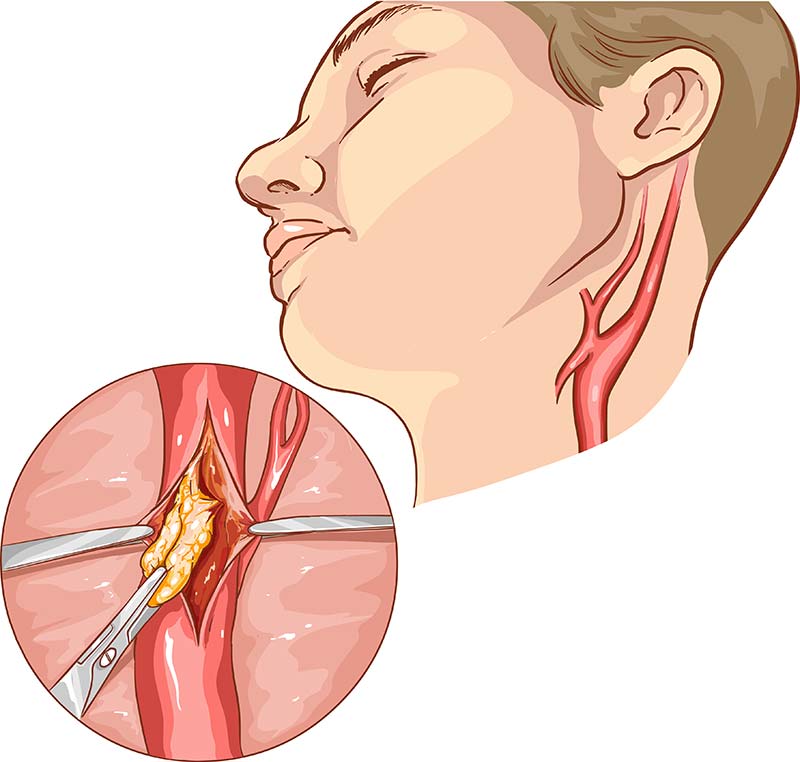
Carotid Endarterectomy is a procedure that is used to remove plaque buildup from the inside of one of the carotid arteries, an artery located on each side of your neck. If you have been diagnosed with carotid disease, these vessels may be narrower as a result of plaque buildup within the walls of the artery. Undergoing carotid endarterectomy can help reduce your risk of experiencing serious complications from carotid artery disease, including a stroke. Here is what you need to know about the process, potential risks, and benefits of a carotid endarterectomy.
Before the Procedure
If you have been diagnosed with carotid artery disease or atherosclerosis, your healthcare provider may recommend a carotid endarterectomy to reduce your risk of having a stroke, which is the main risk with carotid artery disease. Prior to the procedure, you will have a consultation and evaluation. This is what you can expect during the appointment:
- Discuss the purpose and details of the procedure
- Perform a comprehensive medical evaluation to assess your risks and candidacy for surgery
- Discuss the potential complications and alternative treatment options
If your healthcare provider determines that you are a suitable candidate for a carotid endarterectomy, they may also recommend certain steps to ensure you are prepared prior to the procedure. These could include:
- Adjusting or discontinuing any medications you may be taking
- Modifying or restricting your diet
- Avoiding tobacco use and alcohol consumption
- Arranging for transportation and home care assistance following the procedure
During the Procedure
The surgery time for a carotid endarterectomy usually lasts between an hour and a half to two and a half hours. You will be given general anesthesia for this procedure. Here is what you can expect during your carotid endarterectomy: Once you are anesthetized, an incision will be made on your neck to expose the carotid artery. Next, the carotid artery will be temporarily clamped to restrict blood flow. The plaque buildup will be removed from within the artery. Then, the artery will be repaired with or without a patch. During surgery, there is a team that will continuously monitor your brain function to ensure that the brain is receiving adequate blood flow despite having one carotid artery clamped temporarily.
After the Procedure
Once your carotid endarterectomy is complete, you will be transferred to a recovery room for close observation. Here, your blood pressure, heart rate, and neurological status will be carefully monitored. Your healthcare team will also care for your wounds, change dressings, and ensure that your pain is managed appropriately. Most patients can expect to recover in the hospital for 1-2 days after surgery. Your healthcare provider will also schedule follow-up appointments and prescribe any new prescriptions you may need.
Be sure to follow your health care provider’s recommendations for physical activity restrictions and gradually reintroduce normal activities. It is also important to be aware of potential complications following your surgery. To prevent the recurrence of plaque buildup in your arteries, maintaining a healthy lifestyle is essential. This includes eating a balanced diet, exercising regularly, and not smoking.
Learn More About a Carotid Endarterectomy at The Vascular Institute of the Rockies
Plaque buildup in your arteries is a serious health concern that should be treated as such. A carotid endarterectomy is a procedure that is helpful in reducing overall risk of stroke. If you have been diagnosed with carotid artery disease, do not wait to learn more about your treatment options, including surgery. Contact the trusted team at The Vascular Institute of the Rockies to schedule your. We look forward to helping you keep your vascular system in great shape for life!
Read More from CardioVascular Institute of The Rockies
Who Is Most at Risk for Fibromuscular Dysplasia?
Keeping your blood vessels healthy is one of the most important steps you can take to live a long, healthy life. Along with eating a
What are the Complications of Endovascular Aneurysm Repair?
When your blood vessels aren’t healthy, your overall well-being is put into jeopardy. In fact, many vein and artery conditions can lead to life-threatening complications,
Can a DVT Go Away on Its Own? What You Need to Know
Being diagnosed with a blood clot can be a scary experience. While some blood clots are a normal part of your bodily function and will
What Does Claudication Feel Like? Causes and Symptoms
What does claudication feel like and what are the most common causes? When your arteries are not healthy, your overall quality of life can be
Geniculate Artery Embolization (GAE) for Knee Pain Relief
By Monika Neale, MS III GAE – POSSIBLE NEW SOLUTION FOR SOME KNEE PROBLEMS The network of the geniculate arteries comprises six arteries that supply
Arterial vs. Venous Ulcers of the Lower Extremity
By Monika Neale, MS III The two most common types of lower extremity wounds are venous and arterial ulcers. Although they may look and sound