
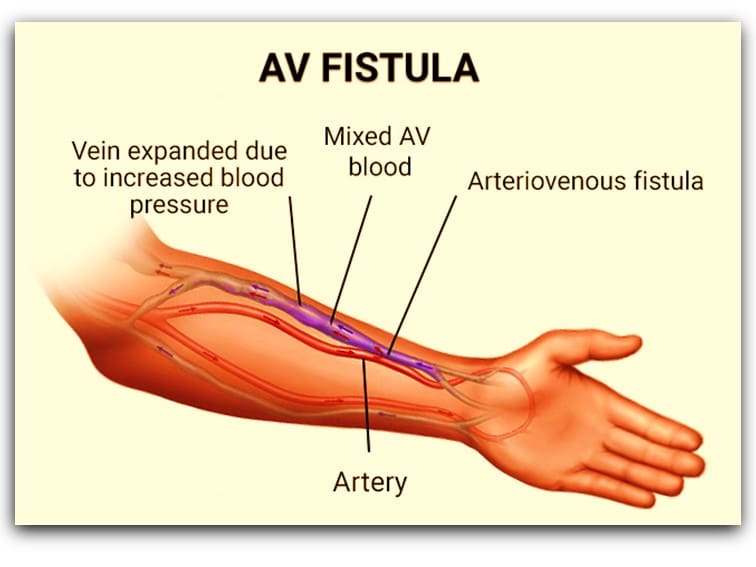
Arteriovenous Fistula: What It Is and How It Is Treated in Vascular Surgery
An Arteriovenous Fistula (AVF) is an abnormal connection between a vein and an artery. Typically, veins are connected to arteries by tiny blood vessels called capillaries. The capillaries bring oxygen-rich blood to other tissues around the body as it circulates through the arteries of the body. In the case of an AVF, however, blood travels directly from the artery to the vein, preventing the tissues around it from receiving the blood they need.
While an AVF can develop anywhere in the body, they are most common in the legs. Small AVFs do not often exhibit symptoms. However, larger AVF’s can cause bulging along the surface of the skin, similar to varicose veins although they are NOT varicose veins. Some cause swelling or pain. People can be born with an AVF while others may develop them later, often from trauma or dialysis-related surgery. AVFs can range from mildly symptomatic to severe. If left untreated, serious AVFs can lead to other health complications including heart failure, internal bleeding, blood clots, or claudication.
Diagnosis and Treatment of AVFs
AVFs are diagnosed by a healthcare provider. They will start by using a stethoscope to listen to the blood flowing through your limbs. In people who have an AVF, the blood flow through the fistula can sound like it is humming. If the healthcare provider suspects you have an AVF, they will request other tests to confirm it.
These may include:
- Duplex ultrasound
- Computerized tomography (CT) angiogram
- Magnetic resonance angiography (MRA)
If you are diagnosed with an AVF, your healthcare provider will recommend a treatment plan based on its severity and your overall health. If the AVF is small, they may choose to monitor it without performing any procedures. Sometimes, small AVFs can resolve on their own over time.
If it is larger and causing symptoms, they may recommend one of the following treatment options:
- For AVFs in the legs that are easily detected on an ultrasound, ultrasound-guided compression may help by pressing an ultrasound probe on the affected area, thereby impeding blood flow to the fistula, and causing it to shut down.
- Catheter embolization: a small tube is inserted into the AVF followed by placement of a small coil or stent. This causes the blood to reroute around the fistula.
- For severe cases with larger AVFs, surgical treatment may be necessary.
The time it takes to completely recover from each treatment depends on which procedure you undergo, the severity of your condition, and your overall health. Your healthcare provider will let you know what to expect before undergoing treatment.
Living with an AVF
The way an AVF can impact your life depends on its location and size. Small AVFs may provoke no symptoms and will only require monitoring, while larger AVFs can lead to uncomfortable or even life-threatening symptoms. If you have been diagnosed with an AVF or are exhibiting signs of an AVF, be sure to work closely with your healthcare professional to manage the condition before it leads to other complications.
Schedule Your Appointment at The Vascular Institute of the Rockies
The trusted team at The Vascular Institute of the Rockies is committed to helping you live the healthiest life possible by promoting a healthy vascular system. If you think you may be suffering from symptoms of an Arteriovenous fistula, do not wait to schedule an appointment with your healthcare provider. They can determine if you need specialized care from the experiences team at Vascular Institute of the Rockies.
Read More from CardioVascular Institute of The Rockies
Who Is Most at Risk for Fibromuscular Dysplasia?
Keeping your blood vessels healthy is one of the most important steps you can take to live a long, healthy life. Along with eating a
What are the Complications of Endovascular Aneurysm Repair?
When your blood vessels aren’t healthy, your overall well-being is put into jeopardy. In fact, many vein and artery conditions can lead to life-threatening complications,
Can a DVT Go Away on Its Own? What You Need to Know
Being diagnosed with a blood clot can be a scary experience. While some blood clots are a normal part of your bodily function and will
What Does Claudication Feel Like? Causes and Symptoms
What does claudication feel like and what are the most common causes? When your arteries are not healthy, your overall quality of life can be
Geniculate Artery Embolization (GAE) for Knee Pain Relief
By Monika Neale, MS III GAE – POSSIBLE NEW SOLUTION FOR SOME KNEE PROBLEMS The network of the geniculate arteries comprises six arteries that supply
Arterial vs. Venous Ulcers of the Lower Extremity
By Monika Neale, MS III The two most common types of lower extremity wounds are venous and arterial ulcers. Although they may look and sound