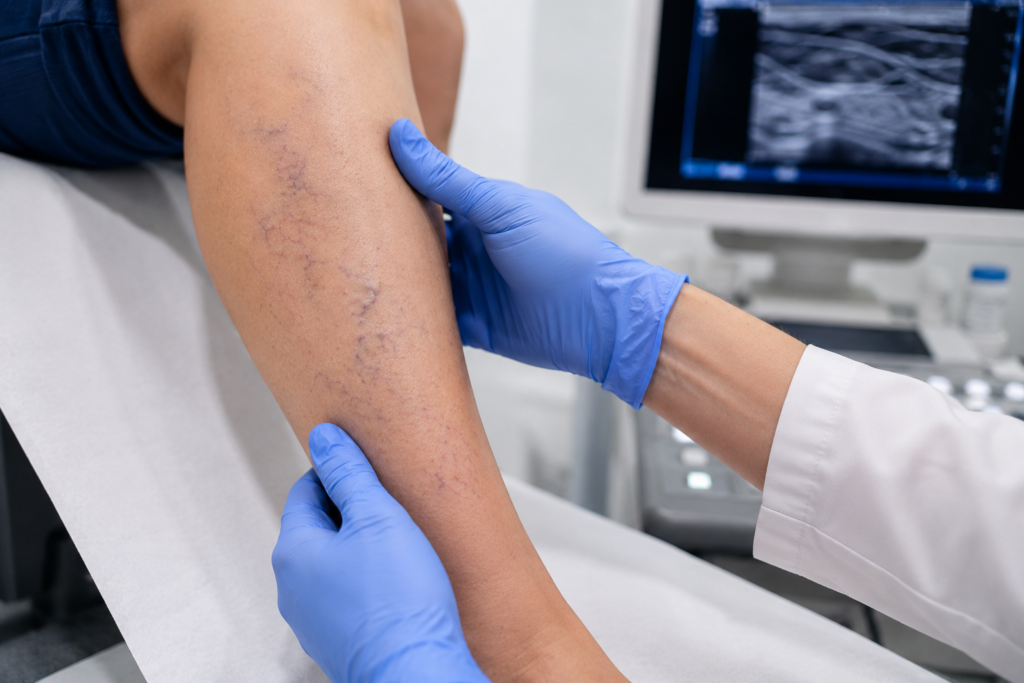
Varicose veins are abnormally enlarged blood vessels due to faulty valves in your veins. While this is not a serious condition, many people find varicose veins uncomfortable and not aesthetically pleasing to look at. Veins normally have one-way valves that prevent blood from flowing backwards. When these become faulty this results in blood flowing backwards and pooling, most commonly in the legs.
Symptoms of Varicose Veins: A lot of people do not have any symptoms
- Leg pain
- Itching
- Soreness
- Swelling in legs
- Heaviness
- Cramping
- Discoloration of the skin
Risk Factors and Causes of Varicose Veins:
- Family history
- Pregnancy
- Obesity
- Age
- Sitting or standing in one place for a long period of time
- Previous blood clot
Treatment:
- Before treating varicose veins you will get a full workup including an ultrasound of your veins to assess the blood flow in your legs. This will determine what kind of treatment is best suited for you
- Conservative treatment includes compression socks, weight loss, elevating legs, and exercising.
- After trying conservative treatment options next line are minimally invasive procedures, which are usually done in the office as an outpatient. These include venous ablation (sealing off the veins that had bad valves using laser or radio waves) and removing the varicose veins directly through tiny incisions that can be closed with a bandaid.
- If you have varicose veins that are CAUSING SYMPTOMS, ask to see a vascular surgeon. Almost all insurance plans cover symptomatic varicose veins. Treating varicose veins for cosmetic reasons is usually not covered and the results of treatment is usually not worth doing it.
Read More from CardioVascular Institute of The Rockies
Who Is Most at Risk for Fibromuscular Dysplasia?
Keeping your blood vessels healthy is one of the most important steps you can take to live a long, healthy life. Along with eating a
What are the Complications of Endovascular Aneurysm Repair?
When your blood vessels aren’t healthy, your overall well-being is put into jeopardy. In fact, many vein and artery conditions can lead to life-threatening complications,
Can a DVT Go Away on Its Own? What You Need to Know
Being diagnosed with a blood clot can be a scary experience. While some blood clots are a normal part of your bodily function and will
What Does Claudication Feel Like? Causes and Symptoms
What does claudication feel like and what are the most common causes? When your arteries are not healthy, your overall quality of life can be
Geniculate Artery Embolization (GAE) for Knee Pain Relief
By Monika Neale, MS III GAE – POSSIBLE NEW SOLUTION FOR SOME KNEE PROBLEMS The network of the geniculate arteries comprises six arteries that supply
Arterial vs. Venous Ulcers of the Lower Extremity
By Monika Neale, MS III The two most common types of lower extremity wounds are venous and arterial ulcers. Although they may look and sound