
An aneurysm is a balloon-like dilation or bulge that occurs in the wall of weakened blood vessels. While they can occur in many arteries in the body, they are most common in the abdominal aorta, a vital blood vessel that supplies blood to your legs. AAA’s that continue to bulge have an increased chance of bursting, leading to an internal hemorrhage and death.
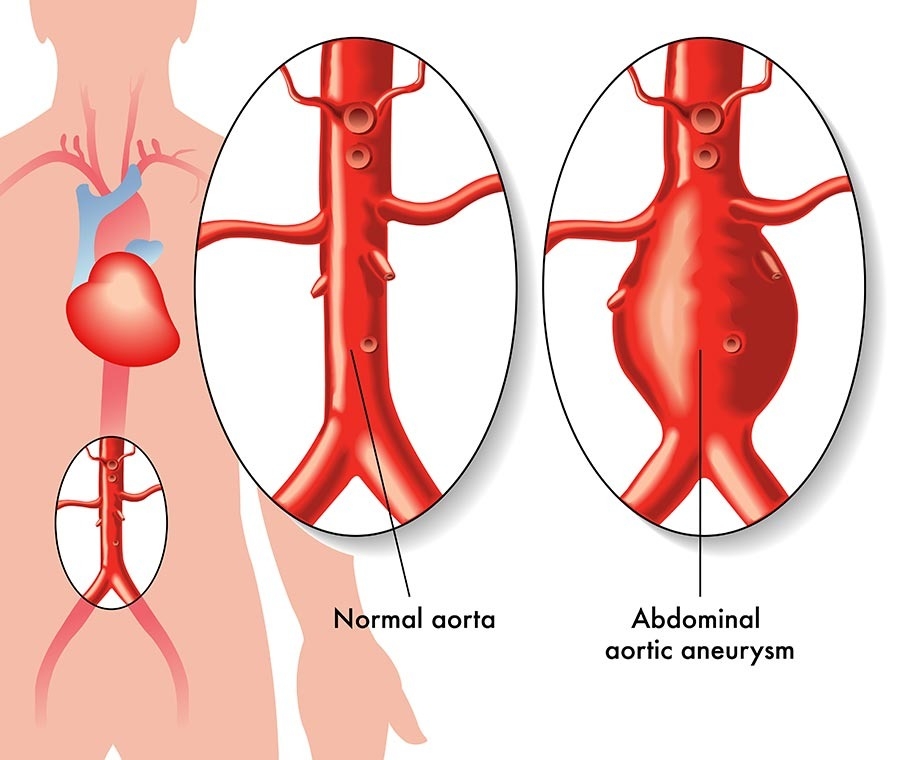
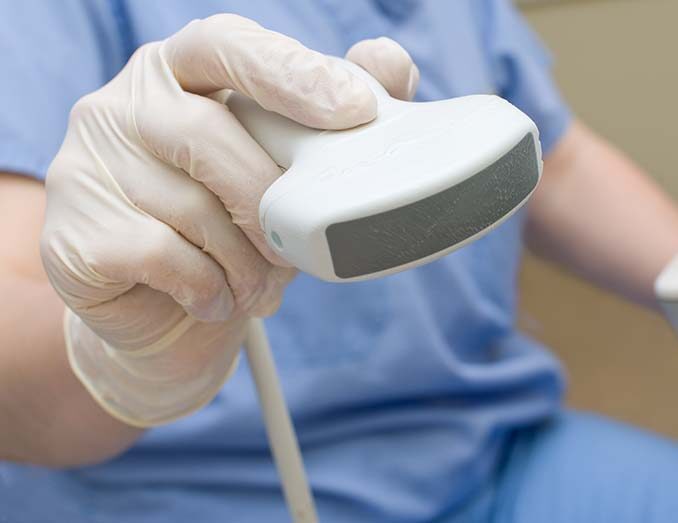
An ultrasound scan of the abdomen is very effective at identifying the presence of an AAA and at measuring its maximal size.
Medicare covers AAA screening in males older than 65 who have never smoked more than 100 cigarettes.
Endovascular Repair
This minimally invasive surgery involves an incision in each of the two groins so a device (a stent graft or a cylindrical metallic frame covered with a fabric), guided by x-ray, can be inserted into the aortic aneurysm. Once inserted in the proper position, the stent graft replaces the abnormally dilated section of aorta from within. Endovascular repair involves less operative stress on the body without a painful abdominal incision, less blood loss, a lower operative mortality, reduced length of hospital stay and a quicker recovery compared to open surgery.
Open Surgical Repair
This approach involves making an incision in the abdomen to expose the aortic aneurysm. Clamps are applied to the arteries above and below the aneurysm while the section of the abnormally enlarged artery is replaced by a synthetic tube or graft. Clamps are removed and blood flow is restored. This surgery boasts durable success, however it is a major surgery. Patients will spend 7-10 days in the hospital and typically return to their normal self in 2 to 3 months.